For as long as humans have been making paintings, paint has been a slave in service to the painter, nothing more than a tool, a prisoner trapped, bound to the application surface.
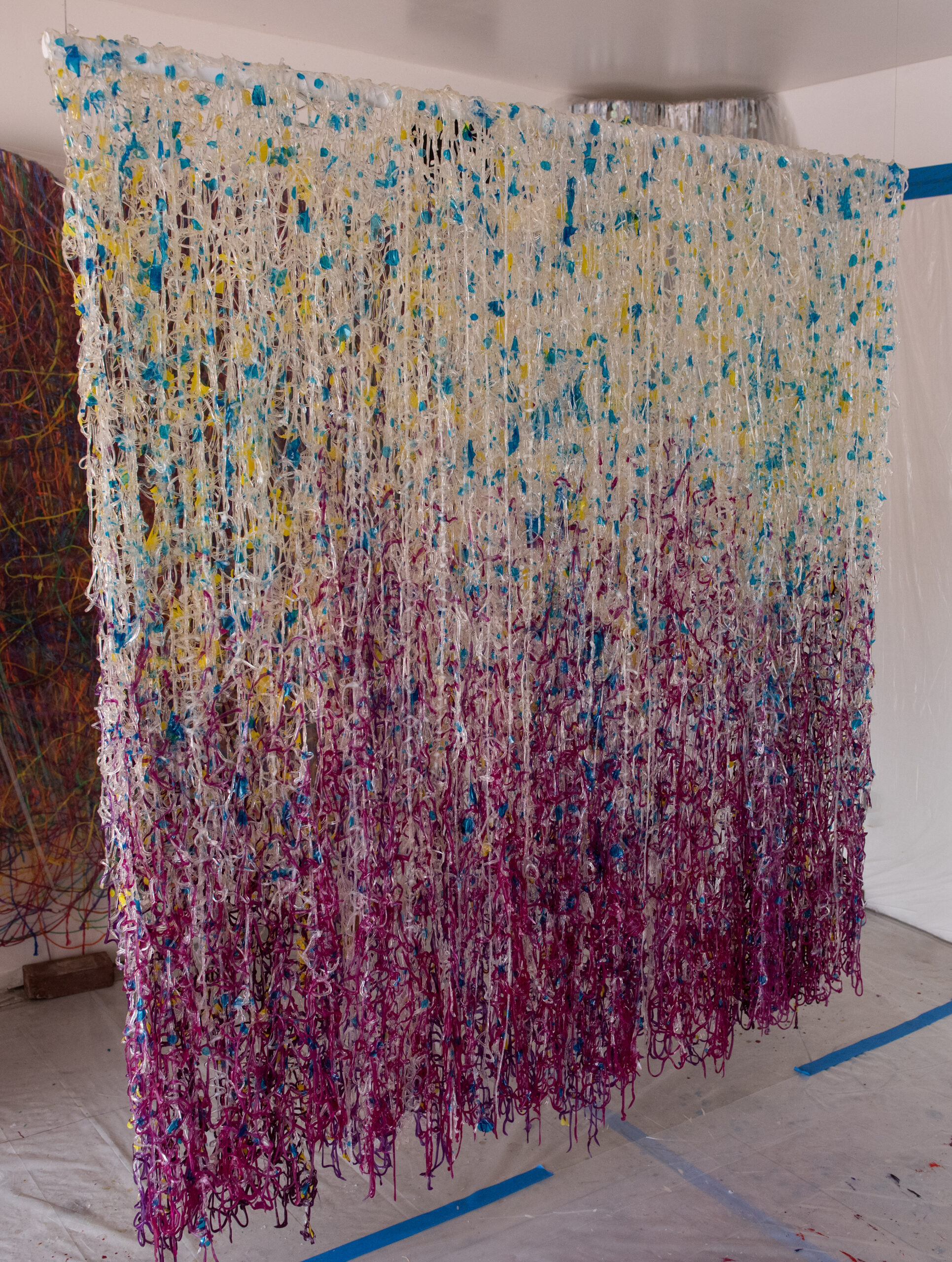
Forty years ago, I questioned whether a painting could exist that had no canvas – whether Paint itself could become the Painting. In 2018, that inquiry materialized, and FREED Painting emerged as a new direction in the medium. By eliminating the traditional two-dimensional application surface, Paint is liberated so it may exist in three-dimensional space and assert its own identity for the first time. This shift poses questions about material agency, medium specificity, and the future of Painting itself.
All FREED paintings occupy three-dimensional space, granting viewers full circumferential access. The back of a painting – historically irrelevant – becomes newly visible and conceptually active. This 360-degree engagement introduces a viewing experience not previously available in the history of Painting.
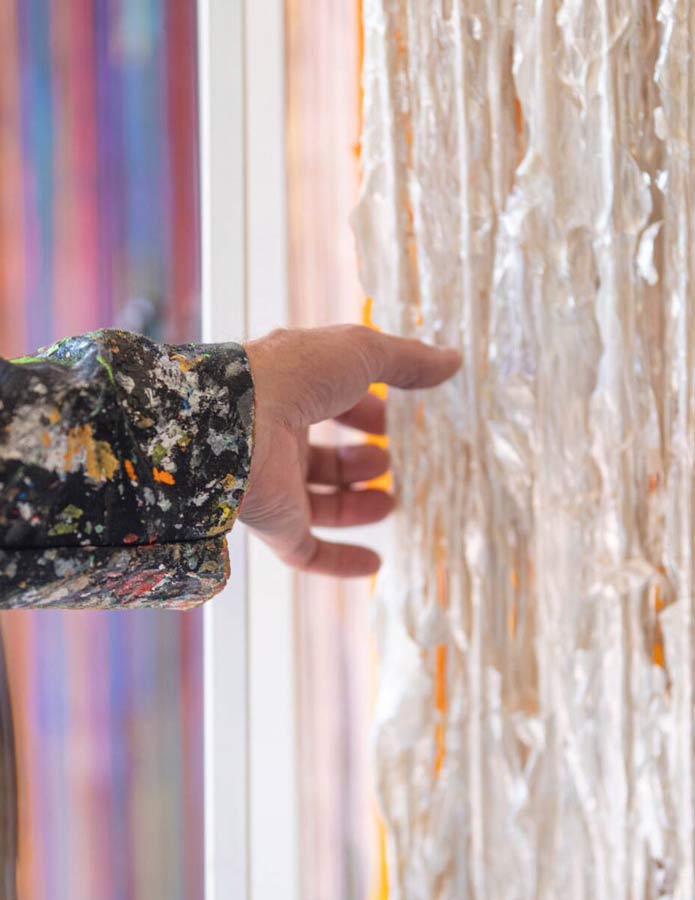
The FREED Painting process allows for the creation of transparent paintings. A transparent painting has never been considered because it is impossible to produce using Traditional means. Apply clear acrylic medium to a surface and it is indistinguishable from that surface, but remove the surface and what is left? Nothing less than a magical object. It is a paradox. There is shape and form and presence, words typically used to describe sculpture, but these are paintings! And yet, how can they be paintings if they have no color? What are we looking at, something, nothing? Transparent paintings raise ontological questions. They challenge foundational definitions of Painting and require new descriptive language.
FREED Painting emancipates Paint so it may proclaim its own identity. Paint’s identity is displayed through its color density, from clear transparency to subtle layers of color overlapping and intermingling to splashes of color coalescing to finally bold, opaque expressions of color. It is difficult to adequately describe the visual impact of these paintings. A transparent painting looks like icicles. A painting displaying subtle colors looks like a stained-glass window and the opaque strand paintings express themselves with bold color. Color density variety is present in Traditional paintings, but it just doesn’t have the same impact it does when it is Paint alone, suspended in space, freed from a substrate. FREED Painting presents Color in varying densities in a dynamic way that provides the viewer the opportunity to develop a relationship with Paint itself that is truly unique and new.
FREED Painting is a new paradigm in the field of Fine Art Painting and redefines what a Painting can be.